Material and Sealing Technology in Ball Valve Design
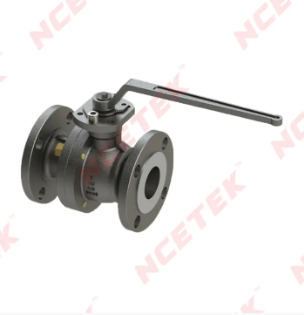
Industrial pipeline systems require valves that can provide effective shutoff while maintaining compatibility with different operating pressures and fluid conditions. A Cast Steel Floating Ball Valve combines a cast steel pressure-containing body with a floating ball sealing structure. This configuration is commonly considered for selected industrial applications where the ball can move slightly under fluid pressure to establish contact with the downstream seat.
The floating ball design differs from a trunnion-mounted structure. In a floating ball valve, the ball is not mechanically supported by dedicated upper and lower trunnions. Instead, it is held in position through the stem connection and seating arrangement. When the valve is closed, upstream fluid pressure acts on the ball and pushes it toward the downstream seat, helping establish the sealing contact required to stop flow.
This pressure-assisted sealing principle is one of the main characteristics of floating ball valves. However, the actual performance depends on ball geometry, seat material, pressure conditions, and manufacturing accuracy. As differential pressure increases, the force acting on the downstream seat can also increase. This makes the relationship between pressure, operating torque, and seat loading an important consideration during product selection.
The cast steel body provides the main pressure-containing structure. Casting allows manufacturers to produce body shapes with internal passages, seat pockets, stem openings, and connection features. The selected casting material must meet the mechanical and chemical requirements of the intended service. Carbon steel grades are commonly considered for general industrial applications, while stainless steel and suitable alloy materials may be required for particular corrosion or temperature conditions.
Casting quality is influenced by several manufacturing factors, including raw material composition, mold preparation, pouring conditions, solidification, and heat treatment. These processes need to be controlled according to the material specification and product design. Depending on the application and inspection requirements, cast components may undergo visual examination, dimensional verification, and nondestructive testing.
After casting, the valve body is machined to establish accurate internal dimensions and component interfaces. The seat pockets must provide suitable positioning for the seating components, while the stem opening must maintain the required alignment with the ball. Flange faces and other connection surfaces also require appropriate dimensional control to support installation and sealing.
The ball is another critical component. Its spherical geometry and surface finish influence the contact relationship with the seats. Stainless steel and other suitable materials may be selected according to the transported medium and service requirements. The ball surface should be manufactured according to the design tolerances to reduce uneven contact and unnecessary operating resistance.
Seat materials are selected based on pressure, temperature, fluid compatibility, and expected operating cycles. PTFE and reinforced polymer materials may be considered for many conventional applications, provided their operating limits are appropriate. Other engineered materials may be required for specialized conditions. Buyers should verify the specific seat material rather than assume that all cast steel floating ball valves use the same sealing components.
The stem assembly transfers movement from the handle or actuator to the ball. Its mechanical strength and dimensional accuracy are important for reliable operation. Suitable stem sealing arrangements help prevent leakage along the external stem interface. Depending on the product design, additional retention or anti-ejection features may also be incorporated to address operating safety requirements.
Operating torque is influenced by the pressure acting on the ball, friction between the ball and seats, stem packing resistance, and other mechanical factors. For larger sizes or higher differential pressure applications, these factors may affect the choice between manual operation and an automated operating mechanism. Actuator selection should be based on actual manufacturer torque information and the intended operating conditions.
Pressure and temperature limitations must be evaluated together. Floating ball structures may experience increasing seat loading under higher differential pressure, which can influence operating torque and seat wear. Thermal expansion may also affect the relationship between the ball, seats, and body. For applications involving substantial temperature variation, the materials and sealing structure should be reviewed as a complete assembly.
Typical applications include industrial water systems, petroleum processing, chemical pipelines, general manufacturing facilities, and selected gas distribution systems. The product's suitability depends on the medium, pressure, temperature, pipeline dimensions, and required leakage performance. For highly demanding large-diameter or high-pressure applications, engineers may also need to compare floating ball designs with trunnion-mounted alternatives.
Inspection and testing help verify product conformity. Depending on the applicable standards and project specifications, procedures may include material verification, dimensional inspection, body pressure testing, seat leakage testing, and operational checks. Casting inspection may also involve specified nondestructive examination methods. Test acceptance criteria should be established before production.
API and ASME standards may apply to particular design and testing requirements, depending on the product configuration. Buyers should confirm the applicable specifications, material grades, pressure classes, and inspection scope in the technical documents. Traceable manufacturing and testing records can support project acceptance and subsequent maintenance.
Zhejiang Naishi Valve Co., Ltd. operates under the NCETEK and Naishi Valve brands, providing industrial valve products for different pipeline applications. When selecting a Cast Steel Floating Ball Valve, buyers should evaluate casting quality, seat configuration, pressure conditions, machining accuracy, and testing documentation. These considerations help determine whether the selected valve structure is appropriate for the intended service. Additional product information is available at https://www.ncevalve.com/product/.